What happens to luxury when the nearest landfill is hundreds of miles away?
For remote lodges, waste is not a back-of-house inconvenience-it is a test of operational discipline, ecological responsibility, and brand credibility.
In fragile wilderness settings, every bottle, food scrap, battery, and linen delivery carries a hidden logistical and environmental cost. The best luxury lodges now design waste out of the guest experience before it ever arrives on site.
This article explores how leading properties use prevention, sorting systems, composting, supplier partnerships, staff training, and circular thinking to deliver high-end hospitality without leaving a high-impact footprint.
What Sustainable Waste Management Means for Luxury Lodges in Remote Destinations
For luxury lodges in remote destinations, sustainable waste management is not just recycling bins behind the kitchen. It is a full operating system that reduces waste hauling costs, protects fragile ecosystems, and keeps the guest experience premium without relying on single-use convenience.
In practice, this means designing waste out before it arrives on site. A lodge in the Serengeti, for example, may replace plastic water bottles with glass bottling stations, use bulk dispensers for amenities, and ask suppliers to deliver food in returnable crates instead of disposable packaging. These choices lower transport volume, which matters when every waste pickup requires fuel, permits, and long-distance logistics.
A strong system usually covers three areas:
- Waste prevention: smarter procurement, refillable guest amenities, and supplier take-back agreements.
- On-site treatment: composting food waste, separating recyclables, and using approved wastewater treatment systems.
- Tracking and compliance: monitoring waste streams, disposal costs, and environmental reporting for audits or certifications.
Tools such as Waste Logics can help operators track collection schedules, waste contractor performance, and disposal records, while simple digital checklists support housekeeping and kitchen teams. In remote lodges, I’ve seen the biggest gains come from staff training: when chefs, guides, and room attendants understand why separation matters, contamination drops and fewer materials end up in landfill.
The real goal is practical resilience. A lodge that composts organic waste, minimizes packaging, and manages hazardous items like batteries or cleaning chemicals responsibly is less exposed to rising waste management costs and more credible to eco-conscious travelers.
How Remote Luxury Lodges Reduce, Sort, Compost, Recycle, and Transport Waste Responsibly
Remote luxury lodges start with waste reduction because every kilogram flown, driven, or boated out increases logistics costs and carbon emissions. Smart procurement teams choose refillable guest amenities, bulk food orders, reusable glass water bottles, and supplier take-back programs for packaging. In practice, a safari lodge in Botswana may ask produce suppliers to deliver in returnable crates instead of cardboard, cutting storage pressure and pest risk at the same time.
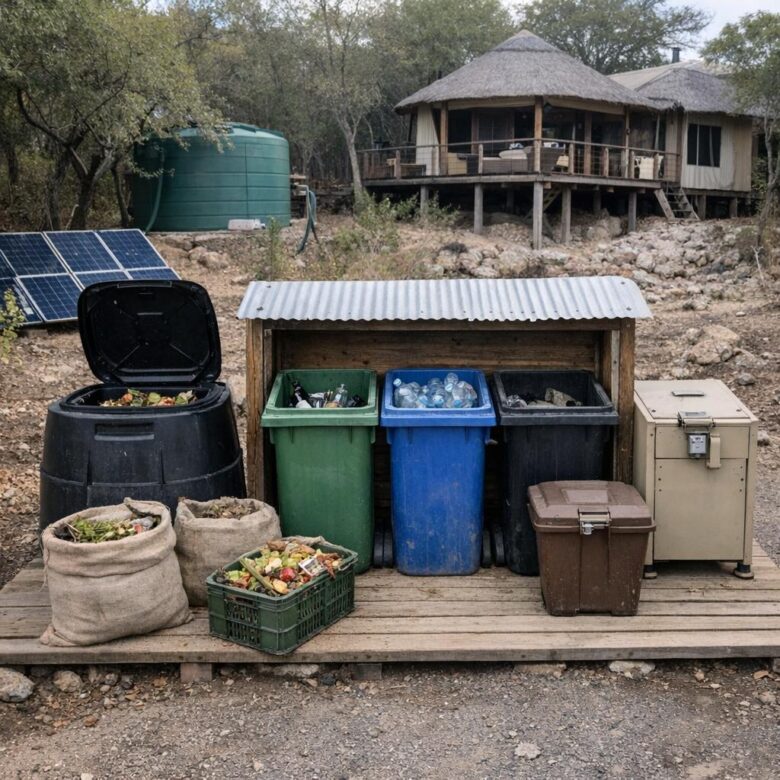
Sorting must happen at the source, not at the back of house after everything is mixed. Clear color-coded bins in kitchens, staff areas, housekeeping stations, and maintenance workshops help separate organic waste, glass, metal, plastics, hazardous waste, and e-waste. Many properties use a simple waste tracking tool such as Waste Logics or digital spreadsheets to monitor disposal cost, recycling volume, and problem departments.
- Organic waste: processed in sealed composters or dehydrators to avoid wildlife attraction.
- Recyclables: compacted and stored dry until scheduled transport to certified recycling facilities.
- Hazardous items: batteries, oils, chemicals, and medical waste kept in labeled secure containers.
Composting is useful, but only when managed carefully. In remote rainforest or savanna settings, open compost piles can attract animals, so lodges often use enclosed composting systems, bokashi bins, or food waste dehydrators. Finished compost can support landscaping, herb gardens, or habitat restoration, reducing the need for imported soil conditioners.
Responsible transport is usually planned around existing supply runs. Empty delivery trucks, boats, or charter vehicles can backhaul compacted recyclables and hazardous waste to licensed waste management services. This lowers waste disposal cost, avoids illegal dumping, and gives luxury travelers confidence that sustainability claims are backed by real operational discipline.
Common Waste Management Mistakes Remote Lodges Must Avoid to Protect Guest Experience and Ecosystems
One costly mistake is treating waste as a back-of-house issue instead of a guest experience and environmental compliance risk. In remote lodges, missed pickups, leaking food bins, or poorly stored recyclables can quickly attract wildlife, create odors, and damage the premium feel guests expect from a luxury property.
Another problem is buying expensive waste management equipment without matching it to local conditions. A commercial composting machine, glass crusher, or food waste dehydrator may look impressive, but it can fail if staff lack training, spare parts are hard to source, or the lodge has no plan for the finished compost or crushed glass.
- Poor segregation: Mixing food scraps, plastics, batteries, and medical waste increases disposal cost and creates hazardous waste disposal issues.
- No waste data: Without waste audit software such as Leanpath, kitchens often over-order ingredients and miss easy food waste reduction opportunities.
- Weak backhaul planning: Remote lodges should coordinate recycling logistics with supply deliveries so trucks do not return empty.
A practical example: a remote island lodge may ban single-use water bottles but still create problems if it ships in glass wine bottles with no return system. A better approach is to negotiate supplier take-back, use refillable beverage systems where appropriate, and schedule glass crushing only when safe storage and transport are confirmed.
Staff habits matter just as much as technology. Clear bin labels, short daily checks, and monthly waste audits help prevent small mistakes from becoming pest issues, septic system strain, or expensive emergency waste management services.
Final Thoughts on How Luxury Lodges Implement Sustainable Waste Management in Remote Areas
Sustainable waste management in remote luxury lodges is ultimately a leadership choice, not just an operational task. The properties that succeed treat waste as part of guest experience, supply-chain design, staff training, and long-term land stewardship. For lodge owners and managers, the practical takeaway is clear: invest first in prevention, then in reliable on-site systems, and only then in disposal solutions. Guests and travel partners should look for lodges that can show measurable results, not vague eco-claims. In remote destinations, true luxury is defined by comfort that leaves the surrounding landscape intact.