What’s the point of escaping the grid if your comfort depends on a dying battery?
Off-grid luxury camping is no longer about choosing between wilderness and convenience. With the right solar power setup, you can run lighting, refrigeration, device charging, water pumps, climate control, and even entertainment without a noisy generator.
The difference between a smooth glamping experience and a frustrating one often comes down to system design: panel capacity, battery storage, inverter quality, and energy-efficient gear. Solar power turns remote campsites, safari tents, cabins, vans, and overland rigs into self-sufficient retreats.
This guide explores the essential solar solutions that deliver reliable, quiet, and sustainable power for upscale camping far from conventional hookups.
What Defines a Luxury-Ready Off-Grid Solar Power Setup?
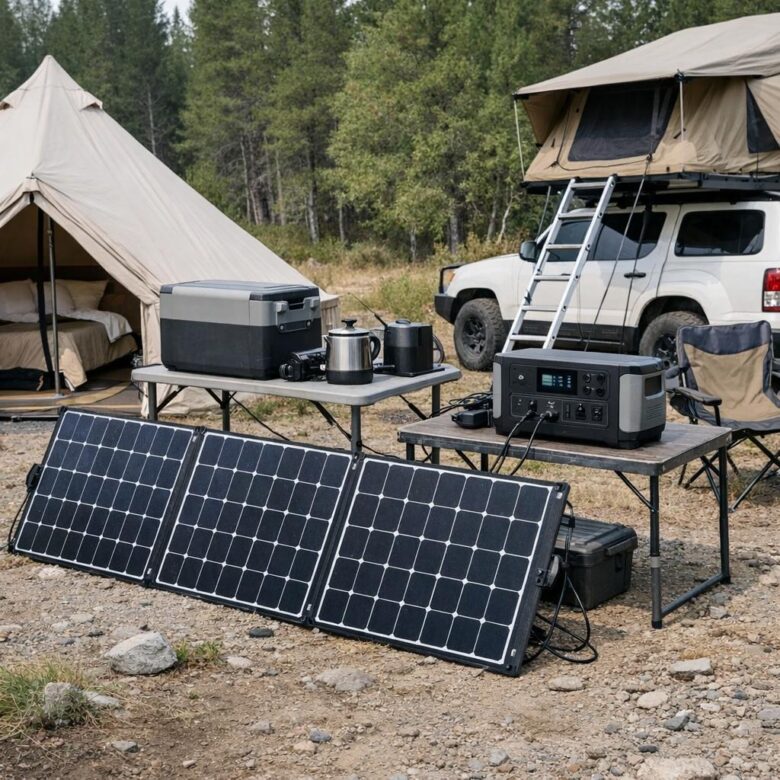
A luxury-ready off-grid solar power setup is not just a panel and a battery; it is a quiet, reliable energy system that can support comfort appliances without constant monitoring. For luxury camping, that usually means enough solar generation, battery storage, and inverter capacity to run essentials like a portable refrigerator, LED lighting, device charging, a coffee maker, Starlink internet, and even a small induction cooktop when planned correctly.
The key difference is stability. A basic camping solar kit may charge phones, but a premium off-grid solar system should handle overnight loads, cloudy weather, and higher startup power from devices such as compressor fridges or water pumps. In real use, I have seen campers underestimate power needs because they calculate only daytime use and forget that refrigeration, Wi-Fi routers, and security lights keep drawing power after sunset.
- Battery capacity: Lithium LiFePO4 batteries are preferred for long cycle life, faster charging, and safer deep discharge performance.
- Inverter size: A pure sine wave inverter protects sensitive electronics, laptops, cameras, CPAP machines, and premium camping appliances.
- Monitoring: A tool like VictronConnect helps track solar input, battery status, and real-time energy consumption from your phone.
For example, a couple using a rooftop tent, 12V fridge, drone charger, heated blanket, and mobile hotspot may need a more advanced portable power station or custom solar generator setup than a weekend camper charging only phones. The best luxury camping solar solutions are designed around actual watt-hour usage, not guesswork, because comfort depends on having power when the weather, location, or trip length changes.
How to Size Solar Panels, Batteries, and Inverters for Glamping Comfort
Start with an energy audit, not the solar panel size. List every device your glamping setup will run: LED lighting, phone charging, Wi-Fi router, mini fridge, water pump, heated blanket, coffee maker, or portable air conditioner. Use the watt rating and expected runtime to estimate daily watt-hours, then add a buffer for cloudy weather and guest overuse.
- Solar panels: Match daily energy use, then add extra capacity for winter, shade, and shorter sun hours.
- Battery bank: Size lithium batteries to cover overnight use plus at least one low-sun day.
- Inverter: Choose a pure sine wave inverter that can handle startup surges from fridges, pumps, and appliances.
For example, a luxury bell tent with a 12V fridge, lights, device charging, fan, and small espresso machine may use around 1,500-2,000 watt-hours per day depending on habits. In that case, a 600-800W solar array, a 200Ah lithium battery bank at 12V, and a 2,000W pure sine wave inverter is often more comfortable than a bargain “solar generator” that looks good on paper but struggles with peak loads.
Use PVWatts to estimate real solar production for your location before buying equipment. In my experience, the most common mistake in off-grid luxury camping is undersizing the battery, not the panels. A properly sized solar charge controller, quality cables, and safe fusing matter too, because reliability is what guests notice when the lights stay on and the fridge stays cold.
Common Solar Power Mistakes That Undermine Off-Grid Camping Reliability
One of the biggest mistakes is buying portable solar panels based only on their advertised wattage. In real campsites, shade, panel angle, heat, and cloudy weather can cut output quickly, so a 200W panel may not keep a lithium battery bank full if you are running a fridge, induction cooktop, lights, and device chargers.
Another reliability issue is mismatching the solar charge controller, inverter, and battery capacity. For example, I have seen campers invest in a premium solar generator, then pair it with low-cost panels and thin extension cables that cause voltage drop and slow charging all afternoon. Small details matter.
- Underestimating daily energy use: Use a watt meter or the VictronConnect app to track real consumption before a long trip.
- Ignoring battery chemistry: LiFePO4 batteries cost more upfront but are better suited for repeated deep cycling than many basic lead-acid options.
- Poor panel placement: Even partial shade from a rooftop tent, awning, or tree branch can reduce charging performance.
A common off-grid luxury camping mistake is relying on solar as the only charging source. If comfort appliances are part of the setup, a DC-DC charger from the vehicle or a compact backup power station can protect food storage, medical devices, and communication gear when weather turns bad.
Before upgrading, calculate the total system cost, not just the panel price. Quality cables, fuses, mounting hardware, monitoring devices, and a properly sized pure sine wave inverter often make the difference between a reliable solar power system and a frustrating weekend of dead batteries.
The Bottom Line on Essential Solar Power Solutions for Off-Grid Luxury Camping
Off-grid luxury camping works best when comfort is planned around reliable energy. Choose solar gear by matching your daily power needs to battery capacity, panel output, portability, and weather resilience-not by wattage alone. For short stays, a compact solar generator may be enough; for longer or more demanding trips, invest in expandable batteries, efficient panels, and smart power management.
The right setup should keep essentials running quietly, safely, and consistently while preserving the freedom of remote travel. Prioritize dependable brands, practical charging times, and room to scale as your camping style evolves.