What separates a memorable safari from a million-dollar itinerary that feels truly impossible to replicate? For high-net-worth travelers, the answer is not simply better lodges-it is precision, privacy, access, and seamless movement across borders.
A multi-country African safari must be designed like a private expedition, not a packaged route. Each destination should earn its place, whether for big-cat density in Botswana, gorilla trekking in Rwanda, the Great Migration in Tanzania, or castaway luxury in the Seychelles.
The challenge is balancing rarity with rhythm: private aviation, VIP border handling, specialist guides, conservation-led experiences, and enough breathing space to avoid itinerary fatigue. Done well, Africa becomes a cinematic progression of landscapes, wildlife, culture, and ultra-personalized service.
This guide explains how to structure a high-end, multi-country safari itinerary that feels effortless to the traveler while operating with expert-level logistics behind the scenes.
What Defines a Luxury Multi-Country African Safari Itinerary for High-Net-Worth Travelers?
A luxury multi-country African safari itinerary is defined less by the number of destinations and more by how seamlessly they connect. For high-net-worth travelers, the real value is in private air transfers, exclusive-use villas, specialist guides, flexible scheduling, and reliable on-the-ground support that removes friction between countries, camps, and conservation areas.
In practice, this might mean combining Kenya’s Maasai Mara, Rwanda’s Volcanoes National Park, and Botswana’s Okavango Delta using private charter flights instead of standard regional connections. The cost is higher, but the benefit is significant: fewer airport delays, better luggage handling, more privacy, and more time in the bush rather than in transit.
- Logistics: private aviation, VIP airport meet-and-assist, fast-track immigration, and luggage coordination across borders.
- Experience design: private game drives, conservation access, photographic guides, gorilla permits, and family-friendly safari planning.
- Risk management: premium travel insurance, medical evacuation cover, satellite communication, and vetted ground handlers.
A useful planning tool is SafariBookings for comparing lodge standards and route options, though final execution should usually sit with a high-end safari operator or luxury travel advisor. One real-world insight: the best itineraries often include fewer stops, not more, because fatigue can quickly reduce the value of even the most expensive safari lodges.
For this level of travel, “luxury” also means control. The itinerary should protect privacy, reduce decision fatigue, and allow room for spontaneous moments, whether that is an extra hour with a leopard sighting or a last-minute helicopter transfer over the delta.
How to Sequence Safari Destinations, Private Aviation, and Border Logistics Across Africa
For high-net-worth safari travelers, the smartest route is rarely the one that looks shortest on a map. Sequence destinations around air access, immigration friction, seasonal wildlife movement, and aircraft positioning costs, because private jet charter fees can rise quickly when an aircraft has to reposition empty.
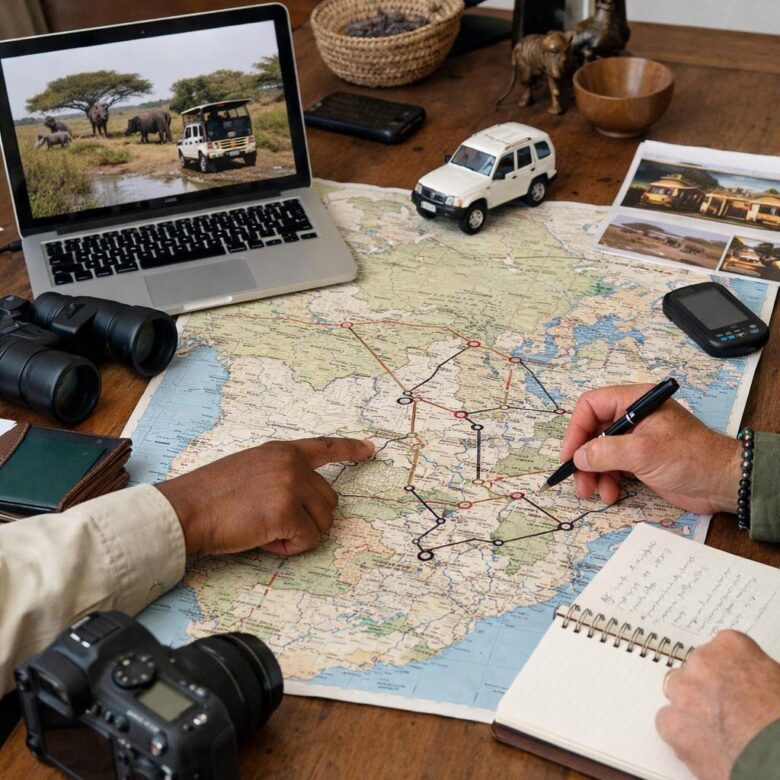
A practical approach is to anchor the itinerary with one major international gateway, then build outward using regional hubs. For example, a Botswana, Zimbabwe, and South Africa safari often works better as Johannesburg → Maun → Okavango Delta → Victoria Falls → Cape Town, rather than forcing multiple backtracks through commercial airports.
- Start with border rules: check visa requirements, passport validity, yellow fever rules, and temporary import permits for high-value camera gear.
- Map aviation feasibility: confirm runway length, fuel availability, night-landing restrictions, and customs clearance at each airstrip.
- Protect the schedule: add buffer nights before gorilla trekking, yacht charters, or international departures.
Tools such as ForeFlight can help aviation teams assess routing, weather, and airport data, while a specialist destination management company should handle landing permits, VIP meet-and-assist, and ground transfers. In real trips, I’ve seen beautifully planned safari circuits unravel because customs was available at the main airport but not at the remote strip the guests wanted to use.
For complex luxury safari itineraries, private aviation should be planned alongside lodge availability, not after it. The best sequencing reduces wasted flight hours, improves wildlife viewing windows, and lowers the risk of missed connections, especially when combining Kenya, Rwanda, Tanzania, Zambia, or South Africa in one journey.
Advanced Safari Design Strategies: Exclusivity, Seasonality, Conservation Access, and Mistakes to Avoid
For high-net-worth travelers, the best multi-country safari itinerary is not simply “Kenya plus Tanzania” or “Botswana plus South Africa.” The real value comes from matching private aviation, exclusive-use camps, conservation access, and seasonal wildlife movement into one seamless luxury safari travel plan.
Exclusivity should be designed intentionally. A private villa in the Okavango Delta, a sole-use safari vehicle in the Serengeti, and VIP airport handling can matter more than adding another country to the route. Use tools like SafariBookings for camp research, but verify availability, aircraft routing, luggage limits, and conservation fees through a specialist luxury travel advisor.
- Seasonality: Avoid planning around generic “best time to visit Africa” advice. For example, the Great Migration river crossings may suit Kenya in August, while Botswana’s flood season creates stronger water-based safari experiences from roughly June to September.
- Conservation access: Prioritize private conservancies and concessions where night drives, walking safaris, and low vehicle density improve both guest experience and wildlife protection.
- Risk planning: Build in medical evacuation cover, premium travel insurance, and buffer nights before international flights, especially when using light aircraft transfers.
A real-world mistake I often see is pairing gorilla trekking in Rwanda with remote Botswana camps on a tight schedule. It looks impressive on paper, but the flight connections can drain the experience. Better design may include Rwanda, Kenya, and Tanzania, where regional access is smoother and the luxury safari cost is easier to justify.
Do not overpack the itinerary. For affluent travelers, space, privacy, and expert guiding usually create more value than collecting passport stamps.
Summary of Recommendations
Designing a multi-country African safari for high-net-worth travelers is less about adding destinations and more about protecting time, privacy, and purpose. The strongest itineraries balance iconic wildlife encounters with seamless logistics, exclusive access, and meaningful contrast between regions.
Practical takeaway: choose fewer locations, better-connected routes, and camps or villas that match the traveler’s preferred pace. When in doubt, prioritize exceptional guiding, private aviation where it adds real value, and seasonal precision over itinerary density. A well-designed safari should feel effortless in motion and unforgettable in impact.